

Hi, I’m an existential imbecile named Max Murphy. Here on The Murphy Memos we explore the absurdity of existence.
Consider subscribing if you’re into that kinda thing.
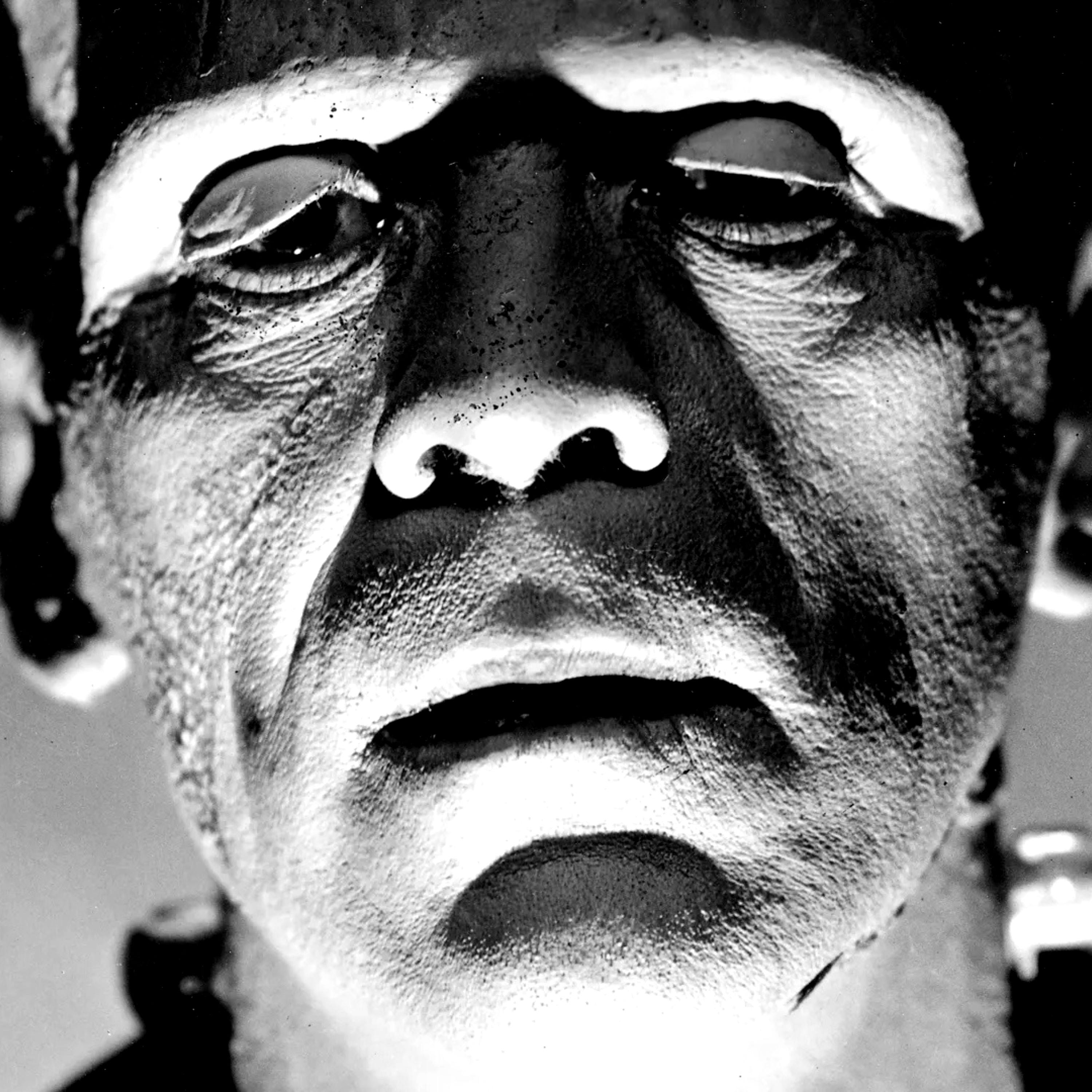
There’s an uncanny feeling that comes with watching the 2025 Frankenstein. It has all the shape and movement of a modern masterpiece, and yet it feels haunted—a monster stitched together from the exhumed and rewired parts of a 200-year-old novel.
Frankenstein is cultural grave robbing at its finest. Here’s why it’s the ultimate diagnosis that our culture is dead.
IT’S ALIVE!!!
Our culture is dead, you say? Then what counts as life? Creative vitality operates on four phases from repetition to genesis:
Imitation: Copying the surface-level details.
Emulation: Understanding the principles behind the work and creating something new that operates by those rules.
Innovation: Creating a new set of rules, a new language.
Inspiration: The work becomes a new north star, a new source for others to imitate and emulate.
The transcendence from Imitation to Inspiration is the process of cultural procreation. This is how the past creates the future. But as you may have heard, the future is canceled.
The overwhelming majority of popular culture is imitation. The sequels. The prequels. The King of the Hill reboot that may as well have been AI generated.
But Frankenstein is no mere lazy adaptation. It took creative liberties. It modernized Mary Shelley‘s story in a way that was both tasteful and cinematically entertaining. Frankenstein might be one of the best movies of the year.
And that’s exactly the problem.
The highest praise we can muster in 2025 is that a film crew successfully understood a book from 1818.
Let’s be brutally honest: Frankenstein is Imitation. Period. Tasteful imitation, perhaps the most skillful imitation you could possibly ask for. But imitation all the same.
And if you zoom out for a minute, and really reflect on that, it gets real depressing real quick. Our most talented, creative, and intellectual elite cannot even emulate past cultural forms. We are settling for imitation.
It’s not hard to imagine a future where AI is good enough to make this movie.
“Turn Mary Shelley’s Frankenstein into a cinematic blockbuster hit. No em dashes.”
Is this really the pinnacle of our cultural capability? Are we that creatively bankrupt? Must I include a third rhetorical question?
And oh, the irony. It’s so thick you could spread it on a sesame bagel. Frankenstein is a story about a man who takes parts from dead bodies, stitches them together, and calls it life.
Is that not what the movie is?
And just like Frankenstein is one of the best movies of 2025, I’m sure one of the best movies of 2026 will be Wuthering Heights.
Another classic, another carcass from the 1800s adapted for the big screen because we can’t be bothered to imagine our own stories.
This is where we need to explore Mark Fisher’s idea of hauntolog…
Fuck, I’m doing that thing again, aren’t I?
I was fully prepared to go even deeper on this. Explore some Mark Fisher quotes. Throw in a few anecdotes about AI displacing artists. Sprinkle in a crude joke or two and call it an essay.
But then I stopped to think: I am definitely going to see Wuthering Heights.
There will be new movies coming out between now and then and thereafter.
But I don’t intend to see those.
Why not?
I was so eager to play the part of the enlightened critic, waving my angry fist at the soulless Hollywood executives who are only in it for the money.
And you, dear reader, were all too eager to read it, weren’t you?
But those Hollywood executives didn’t make me watch Frankenstein over an original indie film. No one did. This is what I chose to do.
And it’s not just my taste in movies either, I’m like this with music too. I’ve been listening to The Eminem Show on repeat for weeks now— an album that was released over 20 years ago. I won’t even try Eminem’s new stuff.
What piece of media are you nostalgia-binging?
Part of the reason Disney keeps making live action remakes of their backlog is that it is profitable. And you know where the money comes from?
You, and me, and your uncle when he needs a movie for the kiddos.
It all begs the question: why do we secretly prefer pastiche of past cultural forms as opposed to emulation, innovation or inspiration?
Collectively, we’re choosing to pay—and thereby incentivize—the creation of imitative art.
We’re the same public that decided Beau is Afraid—a film that legitimately pushed the boundary of what a movie could be—isn’t worth watching. It was a box office bomb. It cost $35 million to make and only grossed $12 million. Meanwhile, the live action remake of Lilo & Stitch is ugh… the second highest grossing film of 2025.
Do we have decision fatigue? Is this just a byproduct of algorithmic over dependence? And why does it make me feel so good to complain about it?
Everyone is out here worrying about AI replacing artists, but really, the thing we should be worrying about is having a public that can’t tell the difference between AI slop and the real thing.
So, there’s good news, and bad news.
The good news: AI’s displacement of artists is not inevitable.
The bad news: we have to develop enough taste to distinguish between imitation, emulation, innovation, and inspiration.
Because if we don’t, what happened to country music will happen with everything. Everything. The movies, the music, the writing, the selfies, the concept of art itself.
It means choosing to see the weird, avante-garde shit instead of letting the algorithm pick for us. It means respecting the dedication it takes to work as an artist today, to sacrifice so much of yourself for the tiny chance that you can help people in some strange, magical way. It means subscribing to The Murphy Memos for being shameless enough to write this essay, and publish it—something no AI would ever dream of doing.
I saw Beau is Afraid and tell everyone who will listen to watch. Will never watch the lilo and stitch remake. Built different
I think as long as you have something new to say about a classic, no problem with an adaptation! But I did feel that Frankenstein didn't really have any new ideas and was visually also quite mid (at least the Nosferatu remake looked stunning). To me it felt like a very cliché 21st century horror remake without any genuine new ideas or things to say :( like I feel like in 2025 there are SO many things to be said about the dangers of just powering ahead with technology, and with scientists thinking that if you can do something that implies that you should do it. I just didn't feel like Del Toro really got to say those things :(