
The Future of America is a Dead Data Center
America is celebrating its 250th birthday by building future ruins

July 4th, 2026.
America is 250 years old. We are going to celebrate. We’ll burn some burgers on the barbie, we’ll blow off some fingers with family friendly explosives, we’re gunna do a freedom damn it. But when we wake up hungover on July 5th, we’ll have to ask ourselves a very serious question: what the Hell comes next?
The future of America looks like Canada! And ugh, not in the good way. This is a dead data center buried in the suburbs of Quebec:
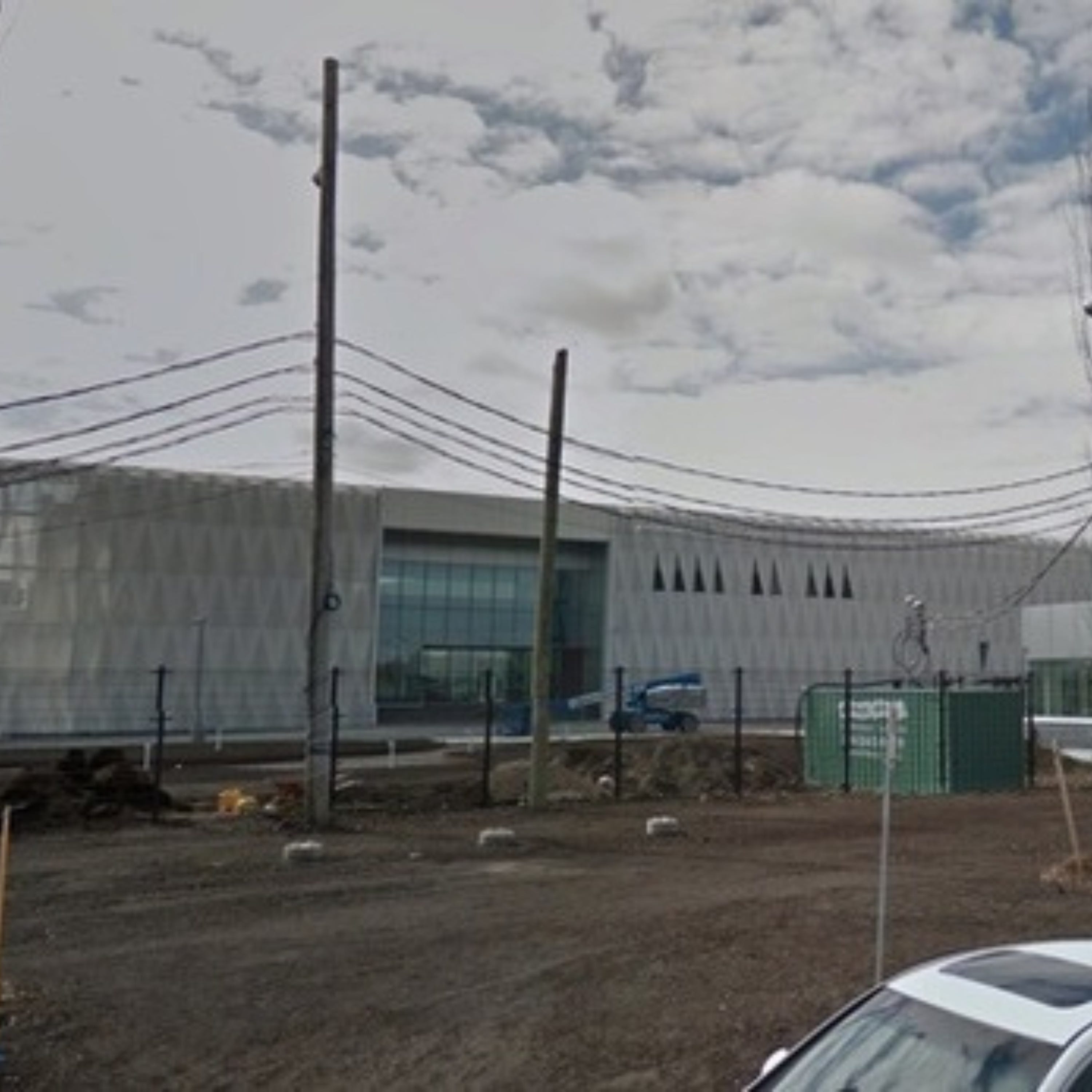
Constructed in 2016, it cost $1.3 Billion. The stress on the power grid, the jaw-dropping water usage, and the inevitable air pollution were necessary sacrifices to boost the local economy. But 10 months later, the data center was abandoned. To this day, it stands empty, maintained by a skeleton crew as they search for someone, anyone to buy this damned thing. It’s been 10 years. No one could have known at the time, but they were building a tomb for a future that will never arrive.
America already leads the world in data centers by a wide margin but we’re tripling down with thousands more yet to come. The data center explosion is driven almost entirely by the AI bubble. An industry so openly driven by speculative hype that even its largest profiteers—Jeff Bozos and Scam Altman—called it a bubble. You know the circus has achieved total victory when PT Barnum tells you its all a ruse and everyone’s 401K gets invested into it anyway.
When the bubble pops—and it is absolutely going to pop—the entire country will end up like that Quebec suburb wondering why we built so many silicon coffins that were obsolete before they were even finished. The future of America is a dead data center. Lots and lots of dead data centers.

Dead Pyramids
Ancient Egyptians were geniuses. Sadly, we don’t count them as part of “civilization” because they used emojis instead of letters but they did something very, very important with those emojis: they solved the mortality problem. They looked at the inevitable ending awaiting them all and said, you know what would fix this? A really, really big triangle. And so they began the noble work of building giant, phallic tombs for their God emperors.
The largest pyramid belongs to some guy named Khufu. He was the pharaoh apparently. To the ancient Egyptians, it wouldn’t be a stretch to say they literally thought of their pharaohs as God emperors. Pharaohs were quasi-divine beings, the living embodiment of Horus (the ancient Egyptian version of the angry sky father God). If you take the most powerful guy in the world and put him in the biggest, fanciest tomb, the thought ran, then surely he could survive forever. And it worked! They found the cosmic loophole to defy death itself.
Khufu, the immortal Egyptian pharaoh walking around. You’ve met him right? Oh, that’s right, you haven’t: because he’s fucking dead. The triangle theory of immortality has failed. But it raises a serious question—why go through so much trouble in the first place? Why move thousands of heavy stones in the desert’s scorching sun all for one rich asshole to imagine he’ll live forever?
Ernest Becker, my favorite smart guy, has some ideas. His 1973 book The Denial of Death won the Pulitzer and explains why ancient Egyptians—in fact, all humans—exist in a state of thinly-veiled insanity: we know we are going to die and there’s nothing we can do about it. But that won’t stop us from trying. “The idea of death, the fear of it, haunts the human animal like nothing else; it is the mainspring of human activity—activity designed largely to avoid the fatality of death, to overcome it by denying in some way that it is the final destiny for man.”
The ancient Egyptians were participating in what Becker called a hero system. Think of it like a psychological framework for finding meaning—clear things you can do to become a hero. This is why the pyramids were so important for the ancient Egyptians. To us, it looks like they were building opulent tombs for their Epstein class equivalent, but to them they were participating in a story—one enchanted with divine aspiration, architectural greatness, and a dash of prehistoric totalitarianism.
From the inside, the story is what gives your life meaning. From the outside, it is madness. But it is your madness. The great pyramid, one of the wonders of the world, was not built by slave labor, nor was it built by aliens, but by a story, a hero system.
The ancient Egyptians had the triangle theory of immortality. We have the square theory of immortality. You know, data centers. Different shape, same shit.
Dead Data Centers
Hi, my name is Max Murphy and I’m a recovering tech bro. I loved technology since I was a child. There’s something almost magical about the possibility of somehow enhancing or expanding human potential. That’s what it tells you individually, but it gets even more exciting when you zoom out. What if technology could save the world?
The tech bro creation myth starts with humans, the flawed, feeble beasts that we are, destroying the world. No one means to destroy the world but for whatever reason we just can’t stop ourselves. And the only way we can stop ourselves, the story goes, is with more advanced technology. Because clearly, we need something beyond mere humanity.
I was hooked. Taught myself how to code and despite having no formal training or industry connections, I went from an unemployed, indebted college grad to becoming the head of marketing at an AI/crypto startup in less than 4 years. It was more than a job to me. This was how I’d play a small role in saving the world. I was just as mad as those ancient Egyptians building pyramids for some guy who doesn’t know their name. It was psychologically, mythologically comforting. It gave shape to an otherwise shapeless existence.
And if you pay attention, you can spot the quasi-spiritual undertones everywhere: in the pitch decks, in the marketing copy, in the podcast interviews where they tell you with a straight face that their vibe-coded SaaS is basically the printing press of the 21st century. Once you see it, you’ll never stop seeing it. The story is a religion and the religion is a cult.
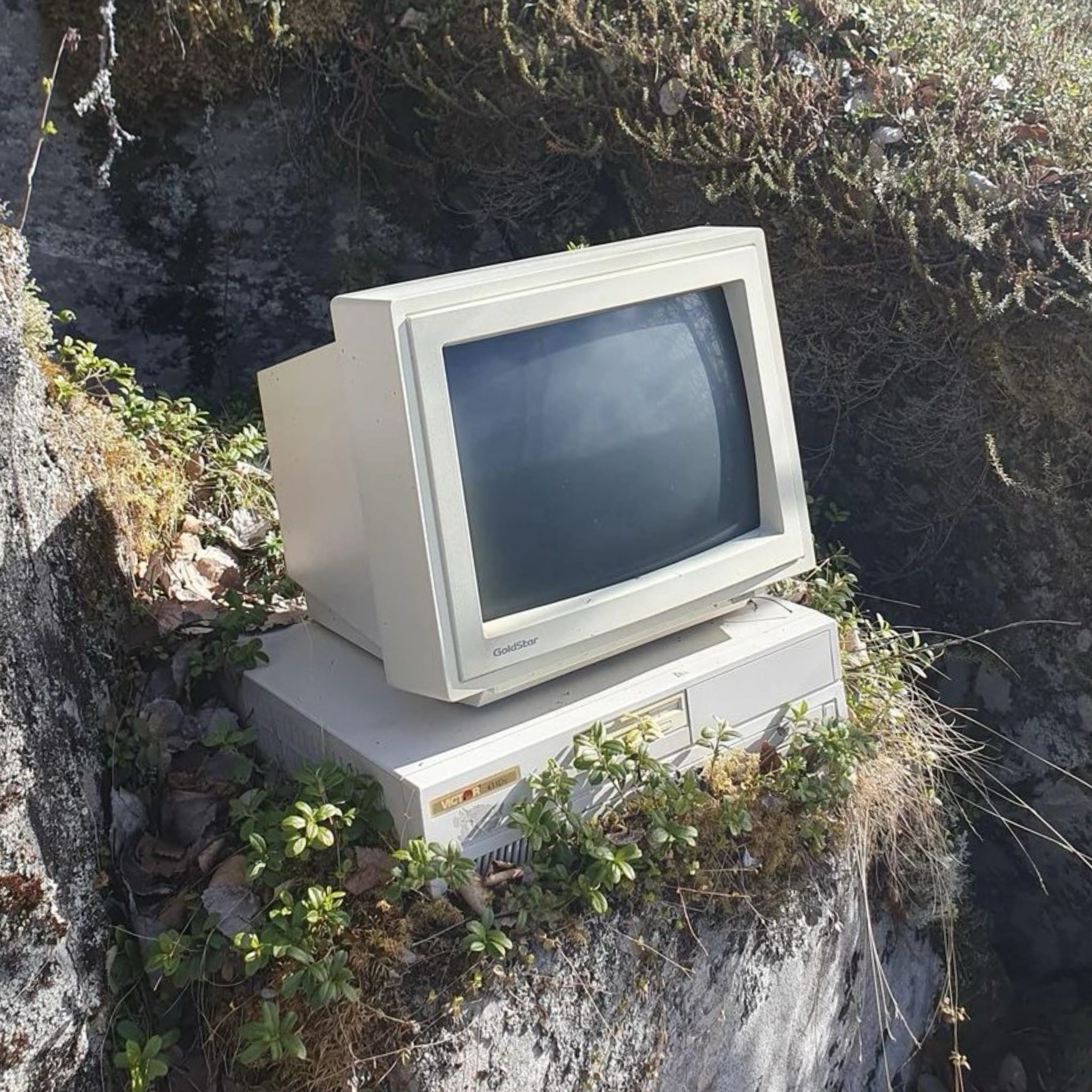
The exact specifics of that story changed all the time. And honestly, some past versions were more convincing. Remember when the internet was gunna usher in an age of enlightenment once everyone had a library of Alexandria in their pocket? Then it was electric cars. Then it was magic internet coins. Then it was digital monkey pictures. The tech bro story has gone through some weird experiments. But that brings us to the latest update to the story, the version where we finally, finally bring the computers to life. AI is how we bring the computers to life. And AI needs lots of computational power. And computational power comes from data centers so we’re gunna have to build a lot of those. As many as we can, as quickly as we can. Move fast. Break things. We’re doing something that’s never been done before. Or so the story goes.
AI is still in its uncanny Frankenstein phase. It’s now polluted the entire internet with worthless slop, but the tech bros are paying artisans to work hard to speed things up and improve the models. We will have completed the story once we summon God, or what the tech bros call artificial general intelligence (AGI). The computer will not just come to life, it will be omniscient. A silicon God who knows best what to do at all times and in all contexts—better than all humans at all tasks. Literally Biblical.
Despite the secular aesthetics, tech bros are as spiritual as ever. They take their hero system very seriously. And you might think I’m being hyperbolic or exaggerating. Maybe one guy’s insider testimony isn’t enough. I could respect the skepticism. But it’s not just me. The most powerful people in the industry think this too. The CEO of Mistral AI pointed out the narrative too, “the AGI talk is about summoning God.” Read that again. Tech bros waiting for AGI are like Christians waiting for the apocalypse. This is the story that most of the AI insiders, and oligarchs actually believe. It is a story that I once believed too.
My faith had already been waning—something about seeing how the sausage is made will do that to you. But my fate was sealed when the very technology I’d marketed turned around and got me too. AI ate my face. It was an anticlimactic Thursday afternoon when my boss called me into a surprise zoom meeting. Laid off. Days later, one of the executives bragged about replacing workers with AI on his public LinkedIn profile.
Whatever the tech bros are telling you is a lie, a damned lie, or outright bullshit. I had to learn the hard way. And I’m afraid our entire country is about to learn the hard way if we don’t stop the rampant, cancerous construction of data ceners.
Data centers are “needed” to provide the computational power for the AI revolution. So many people are using AI that we need to build these data centers to fulfill demand. Or so the story goes. But not only is AI a blatant bubble, but it is a bubble driven by fudged numbers. Do you know why AI adoption metrics look so optimistic? Because the numbers are fake. They force-fed AI features into every single piece of software on the planet. AI features that no one asked for, that everyone hates, that we are definitely not going to pay for. You can’t even make a Google search without an AI summary. Meta’s AI chatbots message you first. They are forcing us to use this shit. But each time AI is technically used—even if the users didn’t intend to—that gets counted toward overall adoption. Middle managers show these charts to the executives. The executives show it to their AI chatbots who say to increase the AI budget further. And that’s how we triple data center construction spending just 4 years.
This will not end well.
When the sheer scale of this fabrication becomes undeniable, when the investors demand a return on their investment, when the money starts drying up, they’ll scramble so someone else can get left holding the bag after the crash. Just like in 2008, just like the dot com crash. And knowing this administration, the same fuckers who gambled our economy on six fingered shrimp Jesus pictures will get a bailout so there’s no crying at the casino. God bless America.
It’s hard to predict exactly how many data centers will be abandoned. But if I were a betting man, I’d say most of them. And just like the one in Quebec, just like the pyramids, they’ll stand as reminders of the guys who needed, more than anything, to imagine that they are very, very special boys. Maybe the most special boys of all. That these very special boys are definitely not worm food like the rest of us.
But we don’t need Canadians or ancient Egyptians to predict our future. It already happened here in America. Probably within your lifetime. The details change but the outline remains, more or less, exactly the same.
Dead Shopping Malls
This may be hard to believe but I am an old man. I was born in the 1900s. And back in my day, we used to believe in things. One of those things was the shopping mall. We may not have pyramids or cathedrals but we have these malls. Or should I say… had.
Last year, around the 4th of July, I was having a hard time getting into the patriotic spirit. RFK’s patriot viagra was still in testing so I did the next best thing: climbed into my oversized SUV and drove to the nearest shopping mall ready to shop till I drop. I dashed out the vehicle, french fries spilling out the driver side door, and then rode a bald eagle to the entrance. But when I walked inside, I couldn’t believe what I was seeing. The lights were on, the businesses were open—but I was the only one there.
If you’re a fellow liminal space enthusiast, you already know the feeling you get from dead shopping malls. Is it liminal? It’s super fucking liminal. The American shopping mall is dead. This used to be the place where the American dream happened. A place where you could chill with the squad as you somewhat begrudgingly paid $120 for a single pair of sneakers. Believe it or not, but those two things are exactly what the mall was built for.
The shopping mall was invented by a guy named Victor Gruen. His idea of the shopping mall drew inspiration from utopian socialism and free market capitalism. You could also say the mall is liminal in that it remains fluid between two fixed categories. It was socialist in the sense that you could hang out in public without being arrested for loitering. It was capitalist in the sense that it was very easy to waste money on things you never would’ve purchased otherwise. It was the closest thing Americans had to a third place which is why, despite the hollow consumerism, we’re still mourning the mall’s slow, painful death. All that has come to replace them are data centers.
The death of the shopping mall hits so hard because it’s not just the death of a brighter future but the death of a story we once believed. Our hero system. Our version of the American dream. The story where being a normal person working a normal job meant you, too, could afford to treat yourself a little. That is over now. As one comment put it, “I think it is still hitting people with slow motion shock that the 20th century is really over. If you personally remember and experienced the excitement of the 80s when high end malls opened, it is so hard to connect that to what now exists, post-recession, post urban chance, post internet shopping. In the 80s, this looked like the start of a big new world of wealth for everyone. In fact, it was the last gasp of 20th century general prosperity.” That story is dead and we are in mourning. Belief in the old story is no longer possible. It is like we murdered God all over again.
We are living in a liminal age. They keep saying political polarization is increasing. What they mean is that enough people have lost faith in the old story and are now looking for answers elsewhere. We’re looking for a new story to believe. The pivot from the malls to the data centers, I think, captures this tension perfectly.
With shopping malls, ordinary Americans could at least imagine how their lives might improve. Even if all the jobs were minimum wage shit jobs, they’d at least have more shopping options. Even the most extractive, predatory mall brought some kind of real value. The same is simply not true of data centers.
Across the political spectrum, Americans hate data centers. Any supposed benefits—such as high paying tech jobs and new tax revenue—are largely data driven lies. Fudged numbers hyping a product that users don’t want. Look, I worked in this industry my entire career. I know how they get these numbers. They cherry pick the few most promising stats and shout them from the rooftops. But they are lies. Damned lies. Lies meant to advance their silicon crusade against a world they want to control and destroy. The water supply may run out, the electricity bills may skyrocket, the forever chemicals may poison the Earth. But these are sacrifices they are willing to make.
Think back to the hero system at play here—what is the tech bro story? That AGI will be invented soon making human intelligence, and most jobs, entirely obsolete. We know what this means for the oligarchs—even more money. But what does this mean for the rest of us? That white collar work ceases to exist? That our media diets devolve into an infinite feed of AI slop? That thought itself becomes entirely commodified?
Normal people have no place in this story. They made our existence redundant, and have no problem leaving us behind to do so they can worship their silicon god. The future is not looking good.
So when you wake up on July 5th, head-throbbing and nauseous, do everyone a favor and imagine a future, any future, better than this one.

If you liked this essay, my tarot cards suggest you’ll also love these:
Crypto is a Bullshit Industry. Yes, all of it you nerd

Hi, I’m an existential imbecile named Max Murphy. Here on The Murphy Memos we explore the absurdity of existence.
The 10-Job Scandal That Exposed Everything

Hi, I’m an existential imbecile named Max Murphy. Here on The Murphy Memos we explore the absurdity of existence with crappy cartoons.
How Sexual Repression Turns Men Into Evil, Horny Monsters

I don’t believe in Hell but if I did, there’s one motherfucker I’d love to send there: St. Augustine.
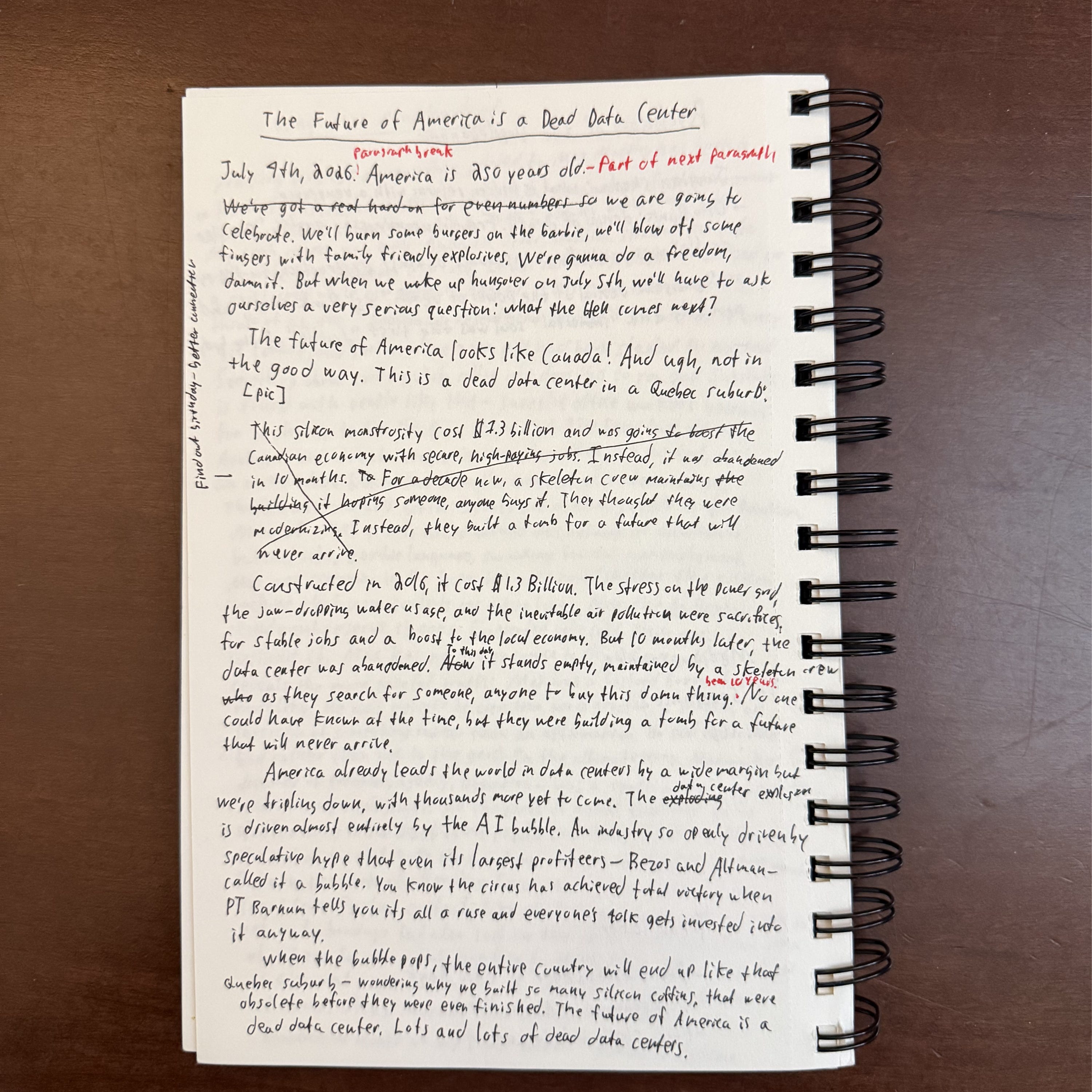
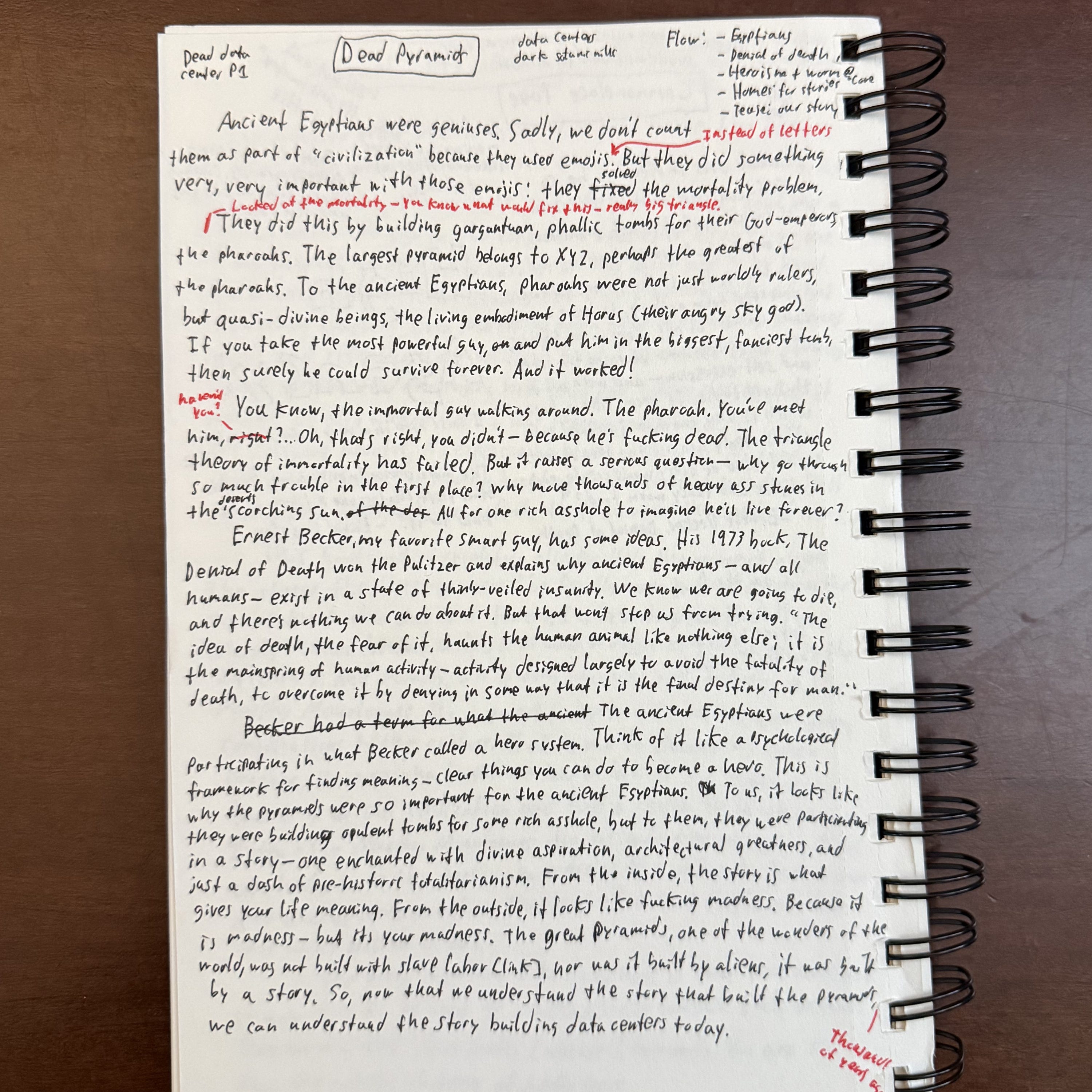
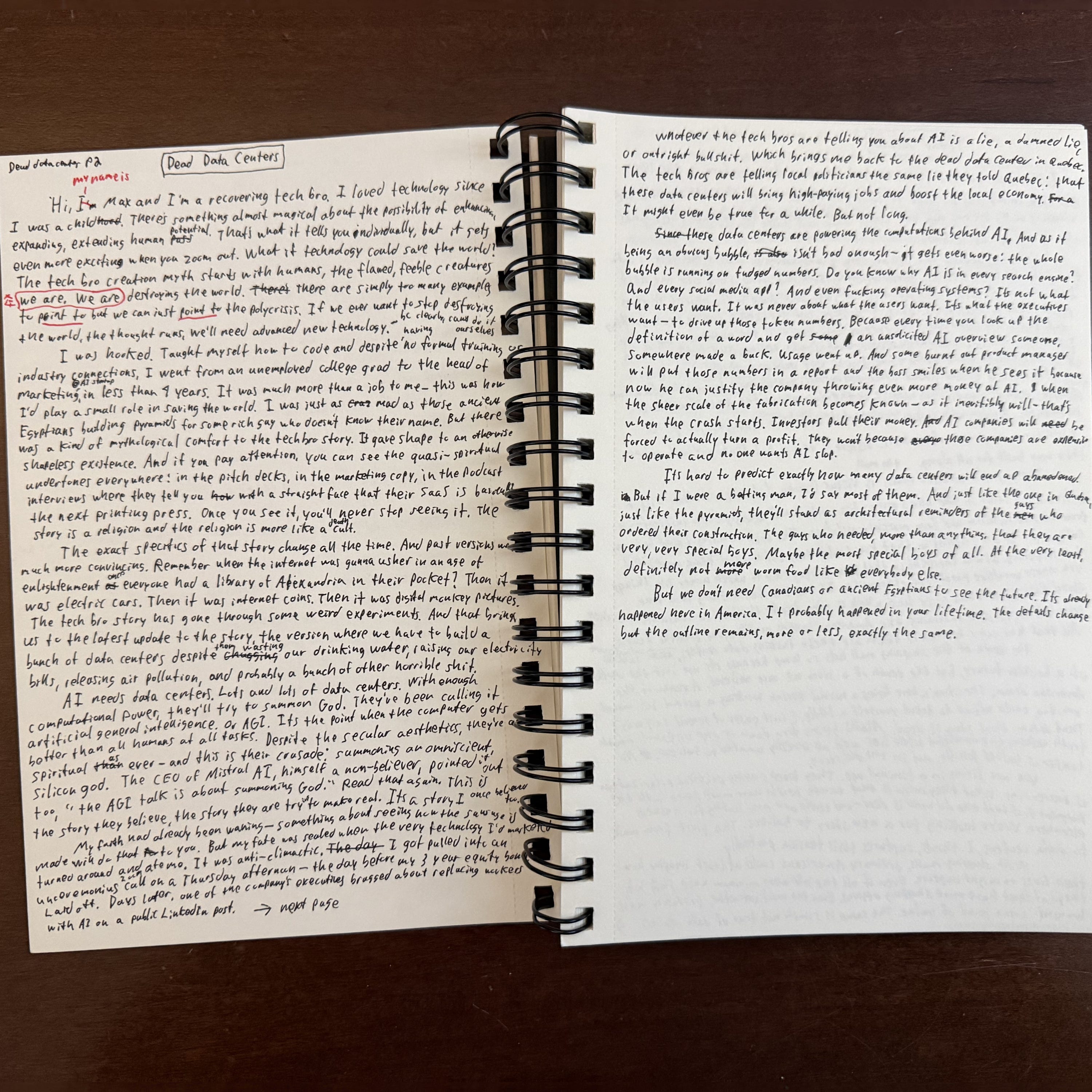
PS: The first draft of this essay was written entirely by hand and I wanted to include the pics in case you love seeing handwriting as much as I do:
Great essay. So my question is this: what would be a good hero system to replace the ones we lost and to subjugate the tech bro bullshit?
who wouldn't like to generate terrible AI pics while the world burns outside and we run out of drinkable water (great as always Max!)